Even before the first candle is lit, you can feel Chanukah arriving. The kids come home singing Chanukah songs, and the house gets ready for eight nights of light.
As Jewish parents, we put a lot of thought into what we want our children to know about being Jewish. We choose their schools, build family traditions, and fill our homes with Jewish experiences we hope they will carry into adulthood. But another question deserves just as much attention: What do we want our children to feel about being Jewish?
A Holiday Named for Education
The word Chanukah shares its root with chinuch, the Hebrew word for education. Both speak of dedication: beginning something in a way that shapes everything that follows. The Maccabees rededicated the Temple. Every Jewish home, in its own small way, does the same with each new generation.
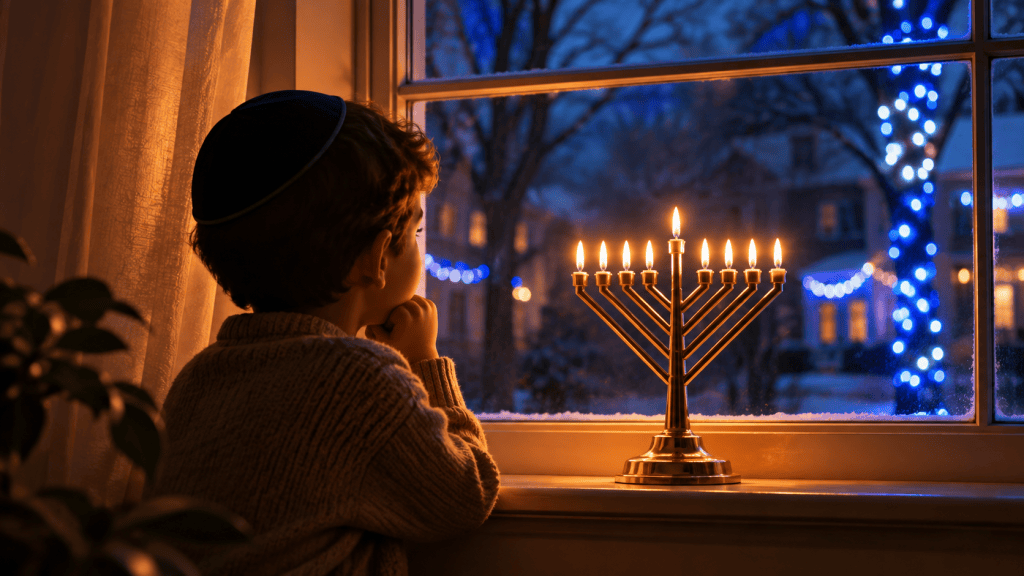
Chanukah is also the holiday we bring into public view. The Talmud teaches that the menorah belongs in the doorway or the window, facing the street, so that everyone passing by sees the miracle. Our menorah tells the world who we are and the heritage we are proud to carry.
So if the menorah in our window tells the world we are proud to be Jewish, what about the children growing up inside? How does the pride we show become something they genuinely feel?
The Everyday Moments That Matter
Family life is busy. The Shabbat table we look forward to all week may also be where siblings fight over seats. Even Chanukah comes with the ordinary demands of parenting.
Tucked inside those moments are opportunities we don’t always recognize. Children learn about Judaism through stories and lessons, but they connect to it through the relationships around those traditions. Sociologist Vern Bengtson, following families across generations, found that the warmth of the parent-child relationship was a key factor in whether faith was passed down. Where relationships were close and supportive, children were more likely to carry their parents’ values forward.
The question, then, isn’t only how much care we put into our children’s Jewish lives. It’s how much of that care they actually feel. Five simple ideas can help, and together they spell CARES.
Here is what they can look like around the menorah this year.
Connection: Closeness Opens the Door
Connection reminds us that relationships matter. A child who feels connected to their parents is often more receptive to what their parents value. The conversations we have, the stories we share, and the genuine enjoyment we show in spending Jewish time together can communicate things that formal lessons cannot.
When we light the menorah with real joy, not just out of obligation, our children learn more than the blessings. They learn what Jewish life feels like to us. When we linger by the candles, enjoying the songs, the stories, and the time together without rushing to the next thing, our children experience not only the beauty of the tradition, but how much we value sharing it with them.
Affirmation: Hear the Feeling, Keep the Expectation
Affirmation means recognizing a child’s feelings without necessarily changing our expectations. A child can be tired of Hebrew school and still be expected to attend. A child can find sitting through a Shabbat meal difficult and still be part of the family gathering. When we acknowledge their experience, we help them feel understood while continuing to communicate what matters. “I know it’s hard to wait for the latkes, especially when they smell so good. We’ll eat right after we light the menorah” keeps the expectation and protects the feeling at the same time.
Responsibility: Give Them a Part to Own
Responsibility gives children an active role in Jewish life. Rather than simply being told to participate, children can help prepare for Shabbat, take ownership of a Chanukah tradition, or contribute something meaningful to a family celebration. A child who sets up the menorah, chooses the night’s Chanukah story, or is put in charge of the dreidel game is not just helping. They are building something of their own. Responsibility helps turn Jewish life into something they participate in, rather than something that is organized for them.
Empowerment: Notice the Effort
Empowerment encourages us to notice their efforts and give them opportunities to grow. When a child asks a thoughtful question, remembers a blessing, or chooses to do something Jewish on their own, our response can strengthen their confidence and sense of ownership. “I noticed you shared your chocolate Chanukah gelt with your sister without anyone asking. That was really thoughtful.” When we recognize these small acts of kindness, we help children see that their choices matter and that they can live the Jewish values we treasure.
Sustainability: Build It in the Calm
Sustainability reminds us that the relationships we build outside difficult moments influence what happens during them. A warm conversation on the way home, a shared laugh while preparing for Shabbat, or a few minutes of genuine attention can help build the connection that carries a family through the more challenging moments. Chanukah itself teaches this. We add one light each night; we do not begin with eight. Growth in Jewish life is meant to build, steadily, night after night. Eight nights of small, warm moments may do more than one spectacular evening.
A Pride They Can Carry Forward
Hebrew schools, day schools, and community celebrations play an invaluable role in teaching our children who they are. But at home, this inheritance becomes personal—something they don’t just learn about but come to love.
The lights in our windows tell the world we are proud to be Jewish. Inside those windows, our children work out what that pride means through the time we share, the feelings we acknowledge, the responsibilities we trust them with, and the joy we experience together.
One day, the menorah will stand in their window. They’ll know how to light it. Our hope is that they’ll want to with joy.
Rabbi Avremi Popack is an educator with more than 30 years in Jewish education and a former Judaic principal. Through Chinuch Impact, he offers workshops and consulting for schools, educators, and parents. He can be reached at ChinuchImpact@gmail.com.


Leave a Reply