A few extra words can do more than soften a request; they can help children understand why it matters, and that can change how they respond.
“Finish your dinner so you won’t be hungry later.”
It was a sentence I heard my wife say to our children countless times. Nothing particularly remarkable about it. Just an ordinary evening, children around the dinner table, and a familiar reminder to finish eating.
But looking back, I realize she rarely stopped there.
Something almost always followed.
“Did you put away the Lego before the neighbors come over? We don’t want to lose all the pieces.”
“Take your sweater. It might get cold later.”
“Put your shoes where they belong so you can find them when we need to leave.”
She wasn’t consciously following a parenting philosophy. She wasn’t trying to teach a lesson about responsibility, motivation, or decision-making.
It was simply how she spoke to our children.
And as I later learned, it was how her mother had spoken to her.
She had inherited something from her mother without ever thinking much about it. An instinct to add a few extra words to a request. Words that explained why something needed to be done.
I noticed that those words did more than soften the request. They often gave it the extra push that turned a reminder into cooperation by clarifying the reason.
But I never really understood why.
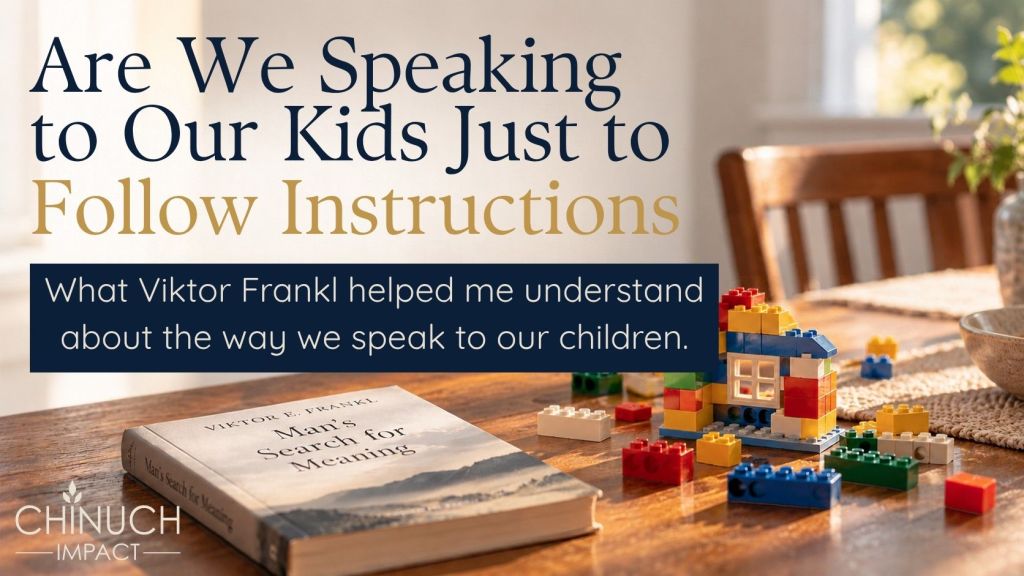
Until I began thinking about Viktor Frankl, whose work helped me connect those moments to a larger idea.
The Why Behind the How
Viktor Frankl, the psychiatrist and Holocaust survivor who wrote Man’s Search for Meaning, explored the extraordinary role that meaning plays in the human experience.
Drawing on the philosophy of Friedrich Nietzsche, Frankl famously referenced the idea:
“He who has a why to live can bear with almost any how.”
Frankl was writing about something far more profound than everyday parenting. His reflections emerged from unimaginable suffering and his exploration of what enables human beings to endure.
I would never equate those experiences with the ordinary frustrations of raising children.
But the underlying insight about human motivation made me reconsider the point I had already seen at home: when children understand why a request matters, they are more likely to cooperate.
When we understand why something matters, our relationship with what is being asked of us changes.
Consider the difference between two instructions.
“Put away your Lego.”
And:
“Put away your Lego before the neighbors come over so we don’t lose the pieces.”
The action is exactly the same.
The effort required hasn’t changed.
But something important had shifted.
In the first sentence, the child hears what the parent wants.
In the second, the child can recognize something that matters to them.
They want to build with their Lego again. They don’t want their favorite pieces disappearing when other children come to play.
The request is no longer simply an instruction coming from someone else. It becomes a reason the child can understand, and that can make all the difference.
And that connection can make all the difference.
Why a Few Words Can Change So Much
Psychologists Edward Deci and Richard Ryan, whose work helped establish Self-Determination Theory, have spent decades studying what motivates human behavior.
One important finding is that people are more likely to internalize expectations when they understand the reasons behind them, especially when those reasons feel meaningful and respect their sense of autonomy.
In other words, understanding a reason can help shift behavior from something we do because someone else demands it to something we recognize as worth doing.
Think about what happens when we simply tell a child to clean up.
The child must decide whether to comply with our instruction.
But when we explain that the pieces might get lost, we introduce another consideration. The child can begin to think about the consequences of leaving everything out.
We have moved beyond directing an action.
We are helping develop the thinking that informs an action.
And that is the deeper point I want to emphasize: explanation does not just improve compliance; it helps children understand why the action matters.
A child who puts away their Lego because a parent insisted has practiced following directions.
A child who begins to understand that taking care of their belongings helps them enjoy them tomorrow is developing a sense of responsibility.
Both children may end up with a clean floor.
But the learning that takes place along the way may be very different.
The Goal Was Never Just the Clean Floor
As parents and educators, we spend an enormous amount of time telling children what to do.
Finish your work.
Wait your turn.
Clean up your materials.
Speak respectfully.
We explain the steps. We repeat the instructions. We remind them of the rules, and sometimes, when they don’t respond, we assume they need to hear the instruction again.
So what if the missing piece isn’t another version of what to do, but understanding why it matters?
Of course, knowing why doesn’t automatically mean a child can or will follow through. Children still need guidance, practice, emotional regulation, and sometimes a helping hand.
A child may understand perfectly well why the Lego should be put away and still be too tired to tackle the mess.
The why doesn’t replace the how. It gives the how a purpose.
When that purpose matters to the child, it can motivate them to begin. That simple understanding of why can lead to action.
Something else to consider is that we won’t always be standing beside our children to tell them what to do. Eventually, they will have to make decisions without our reminders.
If all we have taught them is to follow instructions, they may continue to depend on someone else to provide them. That’s exactly why it’s important to help them understand the reasoning behind their actions; we give them something they can carry into new situations.
They can begin to ask themselves:
What might happen if I don’t take care of this?
Why does this matter?
What can I do now that will make a difference later?
These are the beginnings of independent judgment.
What My Wife Learned Without Realizing It
I don’t imagine my wife’s mother sat her down to explain the psychology of motivation. She simply added a few words to connect what needed to be done with why it mattered.
Not a lecture. Not a lengthy discussion. Just enough to connect what needed to be done with why it mattered. Without even realizing it, my wife began doing the same thing with our children.
What strikes me now is how easily we can overlook the educational significance of these ordinary moments. We often imagine that teaching values requires a dedicated conversation, a carefully planned lesson, or an opportunity to discuss responsibility in depth.
Sometimes it does.
But sometimes responsibility is taught in the middle of cleaning up Lego, and a child’s ability to make thoughtful decisions is shaped by a sentence so ordinary that neither the parent nor the child gives it a second thought.
That is perhaps the most important realization for me: a few extra words can turn instruction into understanding, and understanding into cooperation.
My mother-in-law wasn’t simply teaching her daughter what to do. She was helping her understand why it mattered.
Years later, I watched my wife do the same for our children.
We often focus on giving children the how, hoping they will eventually understand the why, but perhaps we need to remember that the why is often what makes the desire to know the how possible.
When children understand the why, they are far more willing to discover the how.
And perhaps it begins with something as simple as:
“Finish your dinner so you won’t be hungry later.”
A few extra words can do more than soften a request; they can help children understand why it matters, and that can change how they respond.
“Finish your dinner so you won’t be hungry later.”
It was a sentence I heard my wife say to our children countless times. Nothing particularly remarkable about it. Just an ordinary evening, children around the dinner table, and a familiar reminder to finish eating.
But looking back, I realize she rarely stopped there.
Something almost always followed.
“Did you put away the Lego before the neighbors come over? We don’t want to lose all the pieces.”
“Take your sweater. It might get cold later.”
“Put your shoes where they belong so you can find them when we need to leave.”
She wasn’t consciously following a parenting philosophy. She wasn’t trying to teach a lesson about responsibility, motivation, or decision-making.
It was simply how she spoke to our children.
And as I later learned, it was how her mother had spoken to her.
She had inherited something from her mother without ever thinking much about it. An instinct to add a few extra words to a request. Words that explained why something needed to be done.
I noticed that those words did more than soften the request. They often gave it the extra push that turned a reminder into cooperation by clarifying the reason.
But I never really understood why.
Until I began thinking about Viktor Frankl, whose work helped me connect those moments to a larger idea.
The Why Behind the How
Viktor Frankl, the psychiatrist and Holocaust survivor who wrote Man’s Search for Meaning, explored the extraordinary role that meaning plays in the human experience.
Drawing on the philosophy of Friedrich Nietzsche, Frankl famously referenced the idea:
“He who has a why to live can bear with almost any how.”
Frankl was writing about something far more profound than everyday parenting. His reflections emerged from unimaginable suffering and his exploration of what enables human beings to endure.
I would never equate those experiences with the ordinary frustrations of raising children.
But the underlying insight about human motivation made me reconsider the point I had already seen at home: when children understand why a request matters, they are more likely to cooperate.
When we understand why something matters, our relationship with what is being asked of us changes.
Consider the difference between two instructions.
“Put away your Lego.”
And:
“Put away your Lego before the neighbors come over so we don’t lose the pieces.”
The action is exactly the same.
The effort required hasn’t changed.
But something important had shifted.
In the first sentence, the child hears what the parent wants.
In the second, the child can recognize something that matters to them.
They want to build with their Lego again. They don’t want their favorite pieces disappearing when other children come to play.
The request is no longer simply an instruction coming from someone else. It becomes a reason the child can understand, and that can make all the difference.
And that connection can make all the difference.
Why a Few Words Can Change So Much
Psychologists Edward Deci and Richard Ryan, whose work helped establish Self-Determination Theory, have spent decades studying what motivates human behavior.
One important finding is that people are more likely to internalize expectations when they understand the reasons behind them, especially when those reasons feel meaningful and respect their sense of autonomy.
In other words, understanding a reason can help shift behavior from something we do because someone else demands it to something we recognize as worth doing.
Think about what happens when we simply tell a child to clean up.
The child must decide whether to comply with our instruction.
But when we explain that the pieces might get lost, we introduce another consideration. The child can begin to think about the consequences of leaving everything out.
We have moved beyond directing an action.
We are helping develop the thinking that informs an action.
And that is the deeper point I want to emphasize: explanation does not just improve compliance; it helps children understand why the action matters.
A child who puts away their Lego because a parent insisted has practiced following directions.
A child who begins to understand that taking care of their belongings lets them enjoy them tomorrow is developing responsibility.
Both children may end up with a clean floor.
But the learning that takes place along the way may be very different.
The Goal Was Never Just the Clean Floor
As parents and educators, we spend an enormous amount of time telling children what to do.
Finish your work.
Wait your turn.
Clean up your materials.
Speak respectfully.
We explain the steps. We repeat the instructions. We remind them of the rules, and sometimes, when they don’t respond, we assume they need to hear the instruction again.
So what if the missing piece isn’t another version of what to do, but understanding why it matters?
Of course, knowing why doesn’t automatically mean a child can or will follow through. Children still need guidance, practice, emotional regulation, and sometimes a helping hand.
A child may understand perfectly well why the Lego should be put away and still be too tired to tackle the mess.
The why doesn’t replace the how. It gives the how a purpose.
When that purpose matters to the child, it can motivate them to begin. That simple understanding of why can lead to action.
Something else to consider is that we won’t always be standing beside our children to tell them what to do. Eventually, they will have to make decisions without our reminders.
If all we have taught them is to follow instructions, they may continue to depend on someone else to provide them. That’s exactly why it’s important to help them understand the reasoning behind their actions; we give them something they can carry into new situations.
They can begin to ask themselves:
What might happen if I don’t take care of this?
Why does this matter?
What can I do now that will make a difference later?
These are the beginnings of independent judgment.
What My Wife Learned Without Realizing It
I don’t imagine my wife’s mother sat her down to explain the psychology of motivation. She simply added a few words to connect what needed to be done with why it mattered.
Not a lecture. Not a lengthy discussion. Just enough to connect what needed to be done with why it mattered. Without even realizing it, my wife began doing the same thing with our children.
What strikes me now is how easily we can overlook the educational significance of these ordinary moments. We often imagine that teaching values requires a dedicated conversation, a carefully planned lesson, or an opportunity to discuss responsibility in depth.
Sometimes it does.
But sometimes responsibility is taught in the middle of cleaning up Lego, and a child’s ability to make thoughtful decisions is shaped by a sentence so ordinary that neither the parent nor the child gives it a second thought.
That is perhaps the most important realization for me: a few extra words can turn instruction into understanding, and understanding into cooperation.
My mother-in-law wasn’t simply teaching her daughter what to do. She was helping her understand why it mattered.
Years later, I watched my wife do the same for our children.
We often focus on giving children the how, hoping they will eventually understand the why, but perhaps we need to remember that the why is often what makes the desire to know the how possible.
When children understand the why, they are far more willing to discover the how.
And perhaps it begins with something as simple as:
“Finish your dinner so you won’t be hungry later.”


Leave a Reply